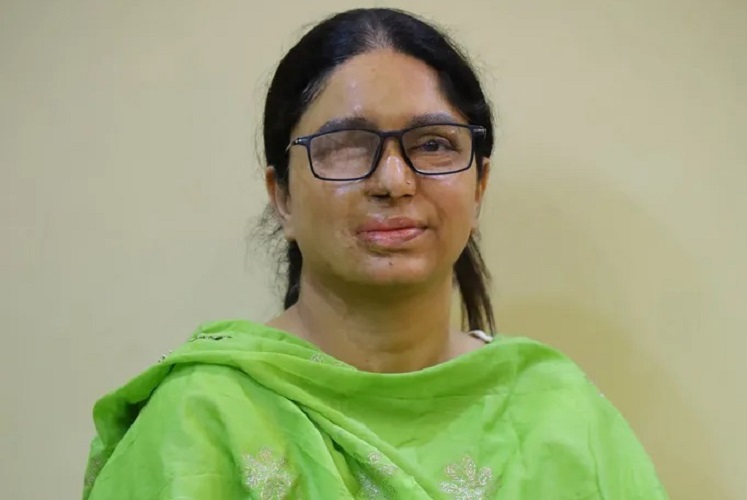
Image Source: Brave Souls Foundation
In 2009, 26-year-old Shaheen Malik was building a life that felt full of possibility. She was pursuing an MBA while working as a student counsellor in Panipat, balancing classes, work, and her ambition of creating a stable future.
One evening, life as she knew it changed instantly when someone threw acid on her face. The attack left her with severe burns and permanent damage to her vision. Over the years that followed, she underwent twenty-five reconstructive surgeries in an attempt to repair the damage.
But the violence of an acid attack does not end when the chemical stops burning. For many survivors, it continues through years of medical treatment, social stigma, and a justice system that moves painfully slowly. For Shaheen Malk, survival was merely the beginning of a much longer fight.
The Long Aftermath of Acid Violence
Acid attacks are among the most brutal forms of gender-based violence. The attacker intends not only to harm but also to permanently alter a woman’s appearance and identity.
Survivors often face lifelong physical consequences, including disfigurement, loss of vision, chronic pain, and repeated surgeries. The psychological impact is often just as profound, with survivors experiencing mental health issues like anxiety, depression, PTSD, and insomnia.
Malik experienced these realities firsthand. Hospitals became a recurring part of her life as she underwent surgery after surgery to reconstruct her face and treat her injuries.
At the same time, she began pursuing justice through the legal system. Soon after the attack, Malik filed a complaint accusing several individuals of conspiring in the assault. What followed was a legal battle that would stretch across sixteen years.
The case moved slowly through the system. Police initially marked it as “untraced” before it was revived years later. The trial itself went through multiple stages, including being transferred from Haryana to Delhi and revived again by the Supreme Court after earlier legal setbacks. In the end, the justice she fought for never arrived.
A Verdict That Raised Difficult Questions
In 2025, after sixteen years of litigation, a Delhi court acquitted the accused due to insufficient evidence and investigative gaps.
The verdict left Malik devastated. All the years she spent attending hearings and waiting for closure had ended without the accountability she had hoped for. Cases like hers highlight a persistent problem in India’s criminal justice system: even when survivors pursue legal action, delays and investigative failures can make justice difficult to obtain.
The Supreme Court itself criticised the prolonged delay in her case, describing it as a “mockery of the legal system.” During the hearings, judges suggested that stronger punitive measures should be considered for acid attackers, including the possibility of seizing and auctioning the perpetrators’ assets to compensate victims. Their reasoning was that acid attack survivors live with lifelong trauma, and a purely reformative approach toward perpetrators may not reflect the severity of the crime.
Malik herself did not describe the court’s comments as a personal victory. Instead, she continued to emphasise the need for systemic change.
Turning Toward Advocacy
Years of navigating hospitals and courtrooms exposed Malik to the plethora of challenges faced by acid attack survivors in India.
Medical expenses are enormous. Legal procedures can take years. Compensation schemes often require survivors to navigate complex bureaucratic processes, which is why many survivors struggle to access them.
Malik responded by creating a support system she wished had existed when she began her own recovery. In 2021, she founded the Brave Souls Foundation, a non-profit organisation dedicated to supporting acid attack survivors.
Brave Souls assists with medical treatment, legal aid, and rehabilitation programs. It also helps survivors pursue compensation claims and access vocational opportunities that can restore financial independence.
Just as importantly, her organisation creates a community. Acid attack survivors often describe feeling isolated after the attack. Public spaces become uncomfortable as strangers stare, whisper, and even mock. Not all survivors receive acceptance from their families or communities.
Through Brave Souls Foundation, she has helped hundreds of survivors access surgeries, legal support, and rehabilitation opportunities that might otherwise have remained out of reach.
Challenging How Society Sees Survivors
Public conversations about acid attacks tend to focus on the brutality of the crime. Images of scars dominate media coverage. Malik’s work emphasises that survivors should not be defined solely by what happened to them. Instead, they should be recognised for the lives they continue to build afterward.
Her perspective matters because acid attacks are designed to erase identity. A woman’s face is targeted because it shapes how society recognises and interacts with her.
When their face is disfigured by violence, survivors are forced to navigate a world that equates physical appearance with worth. Malik’s activism pushes back against this harmful narrative. By speaking publicly about her experience and supporting other survivors, she has helped shift the conversation from pity to dignity.
Her Fight Continues
Despite the setbacks in her own legal case, Malik continues to advocate for stronger protections for acid attack survivors. Her work highlights the need for faster trials, better medical support, and more effective rehabilitation programs. While India has introduced regulations on acid sales and compensation schemes for victims, implementation remains uneven.
Acid attacks attempt to erase women from the world by altering the face that society uses to recognise them. Shaheen Malik refused to be erased. The attack that changed her life could have forced her into silence. Instead, it pushed her toward advocacy, community building, and a persistent demand for justice.
Her scars tell a story that goes beyond violence. They tell the story of a woman who survived an attack, challenged a system that failed her, and chose to ensure that other survivors would not have to fight alone.
Never Miss a Story from Mahevash Muses.