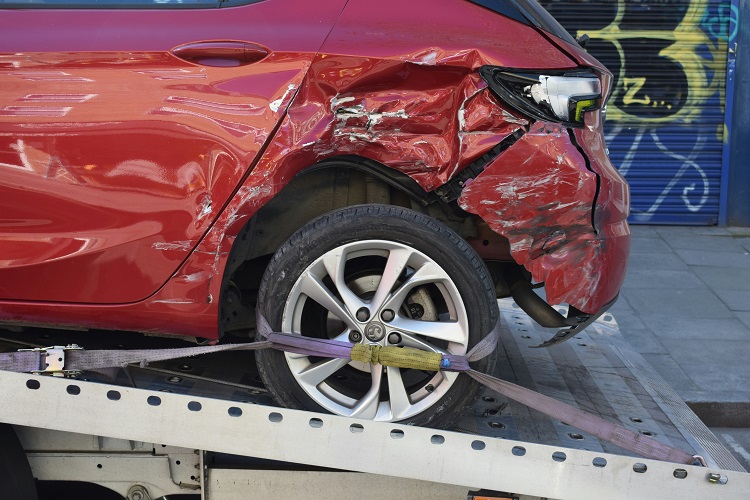
Most cars are built to absorb a crash. Bumpers, crumple zones, airbags and seat belts all work together to slow the force of an impact before it reaches the people inside. But those systems are designed around hitting something at roughly the same height as the car. When a passenger vehicle slides under the back or side of a tractor-trailer, that design can fail completely. These are called underride crashes, and they are among the most devastating collisions on the road.
What Underride and Override Mean
An underride crash happens when a smaller vehicle goes partly or fully beneath a large truck or trailer. Trailer beds sit high off the ground, often around the level of a car’s hood or windshield. If a car strikes the trailer without anything lower to stop it, the hood slips underneath and the trailer edge can enter the passenger compartment. The car’s crumple zone never gets a chance to do its job, and airbags may deploy too late or not at all because the main structure of the car has not hit anything yet.
An override crash is the reverse. It happens when a large truck rides up and over a smaller vehicle, often in a rear-end collision where the truck strikes a car that has slowed or stopped. Because of the truck’s height and weight, the front of the rig can crush the car’s rear and roof.
Both types share one theme: the size and height difference between big rigs and passenger vehicles. When the two collide, the smaller vehicle almost always takes the worst of it.
Rear Underride Guards
Federal rules require rear underride guards on most trailers. You have probably seen them: the steel bar that hangs below the back of a trailer, sometimes called a “Mansfield bar.” The goal is simple. If a car strikes the back of the trailer, the guard should stop it before the hood slides underneath.
Rear guards help, but they are not a cure-all. Their protection depends on several things:
- How strong the guard is and how well it is attached to the trailer
- Whether the guard has been damaged, bent or rusted over time
- Where the car hits, since crashes that strike near the corner can bypass a guard
A guard that is cracked, loose or corroded may collapse when it is needed most. That is why trailer maintenance matters. Carriers must keep maintenance records and inspect their equipment, and a damaged guard is a defect that should be caught and repaired.
The Gap on the Sides
Here is a fact that surprises many people: side underride guards are not federally required. The long open space between a trailer’s rear wheels and the tractor is often left completely exposed. If a car strikes the side of a trailer during a turn, a lane change or at an intersection, there may be nothing to stop it from sliding beneath.
Side crashes can happen in many ordinary situations. A truck making a wide turn across several lanes. A trailer stretched across a road as the rig backs into a driveway or loading dock. A car changing lanes into a truck it did not see.
Some trailers are fitted with side skirts, which are panels added mostly to improve fuel efficiency by smoothing airflow. Side skirts can look like guards, but they are generally not built to stop a car. A true side guard is a structural barrier designed to absorb and redirect crash force.
Visibility Problems
Many underride crashes share a common factor: the driver of the car did not see the trailer in time. That can happen for several reasons.
At night, a trailer stretched across a road can be very hard to see, especially on dark rural highways. A driver’s headlights shine underneath the trailer bed instead of on it, so the road ahead can look open. The trailer may simply blend into the darkness.
Rain, fog, snow and glare can also hide a trailer until the last second.
Trucks also have large blind spots, often called no-zones. A truck driver may change lanes or turn without seeing a car beside the trailer, pulling the trailer into its path.
Lighting and Reflective Tape
Trailers carry lights and retroreflective markings, often seen as red and white striped tape along the sides and rear. This conspicuity tape is meant to catch headlights and outline the shape of the trailer so drivers can recognize it from a distance.
Like guards, these markings only work if they are maintained. Tape can peel, fade or get covered in road grime. Lights burn out. A trailer with missing tape or dead lights is far harder to see at night, and that failure may become an important part of understanding how a crash happened.
When an underride crash occurs, investigators often look closely at the condition of the lights, reflective markings and guards, as well as maintenance and inspection records, to see whether the carrier kept its equipment in proper shape.
What Drivers Can Do
You cannot add guards to someone else’s trailer, but you can lower your risk:
- Keep a long following distance behind trucks, so you have time to stop if they slow suddenly.
- Avoid lingering beside trailers. Pass steadily and move on.
- Be alert at night on rural roads, especially near driveways, farms and industrial entrances where trucks may be crossing.
- Slow down when visibility is poor, and treat a dark gap in the road with suspicion.
- Give turning trucks plenty of room. Trucks often swing wide, and the trailer can sweep across lanes.
Safety Advocacy and Change
Underride crashes have drawn attention from families, safety groups and engineers for years. Many advocates are people who lost loved ones in these crashes and have pushed for stronger rear guards, better standards and required side guards. Engineers have tested side guard designs that show it is possible to build barriers that stop a car from sliding under a trailer.
Change in this area has been slow, and debates continue about cost, weight and design. Still, advocacy has kept the issue in public view, and some carriers have chosen to add side guards on their own.
After an Underride Crash
Underride crashes often cause severe injuries or loss of life. When one happens, the trailer and its equipment become critical evidence. Guards, lights, tape and maintenance records can be repaired, replaced or lost if no one asks for them to be kept. Filing deadlines vary by state and can be short.
Families dealing with one of these cases may want to speak with a firm that knows trucking rules and trailer equipment. Firms such as Black Trucking Lawyers, which focuses only on trucking cases, can explain how underride crashes are typically investigated.
Looking Beneath the Surface
Underride crashes reveal a gap between the vehicles we drive and the trucks we share the road with. Rear guards help when they are strong and well maintained. Side guards are still not required. Good lighting and reflective markings can make the difference between seeing a trailer and hitting it. Knowing these risks helps drivers stay alert and helps families ask the right questions when something goes wrong.
This article is general information, not legal advice. Talk to a licensed attorney about your own situation.
Never Miss a Story from Mahevash Muses.